The Dopamine Menu: Why Your Brain Craves Sugar & How to Hack It
Why you can't stop eating chocolate at 3 PM. It's not a willpower failure; it's a dopamine hunt. Here is how to build a "Dopamine Menu" that satisfies the craving without the sugar crash.
Read Time: 4 Mins
It’s 3:00 PM. You have been staring at a spreadsheet for four hours. Suddenly, your brain starts screaming one word at you:
"Sugar".
You don't want an apple. You don't want a handful of almonds. You want a chocolate bar, a fizzy drink, or a biscuit. And you want it now.
If you have ADHD (or just a tired, overworked brain), this isn't a failure of willpower. It is a biological emergency. Your brain is running low on fuel, and it is hunting for the fastest, easiest source of stimulation it can find.
In the neurodivergent world, we call this "Dopamine Seeking."
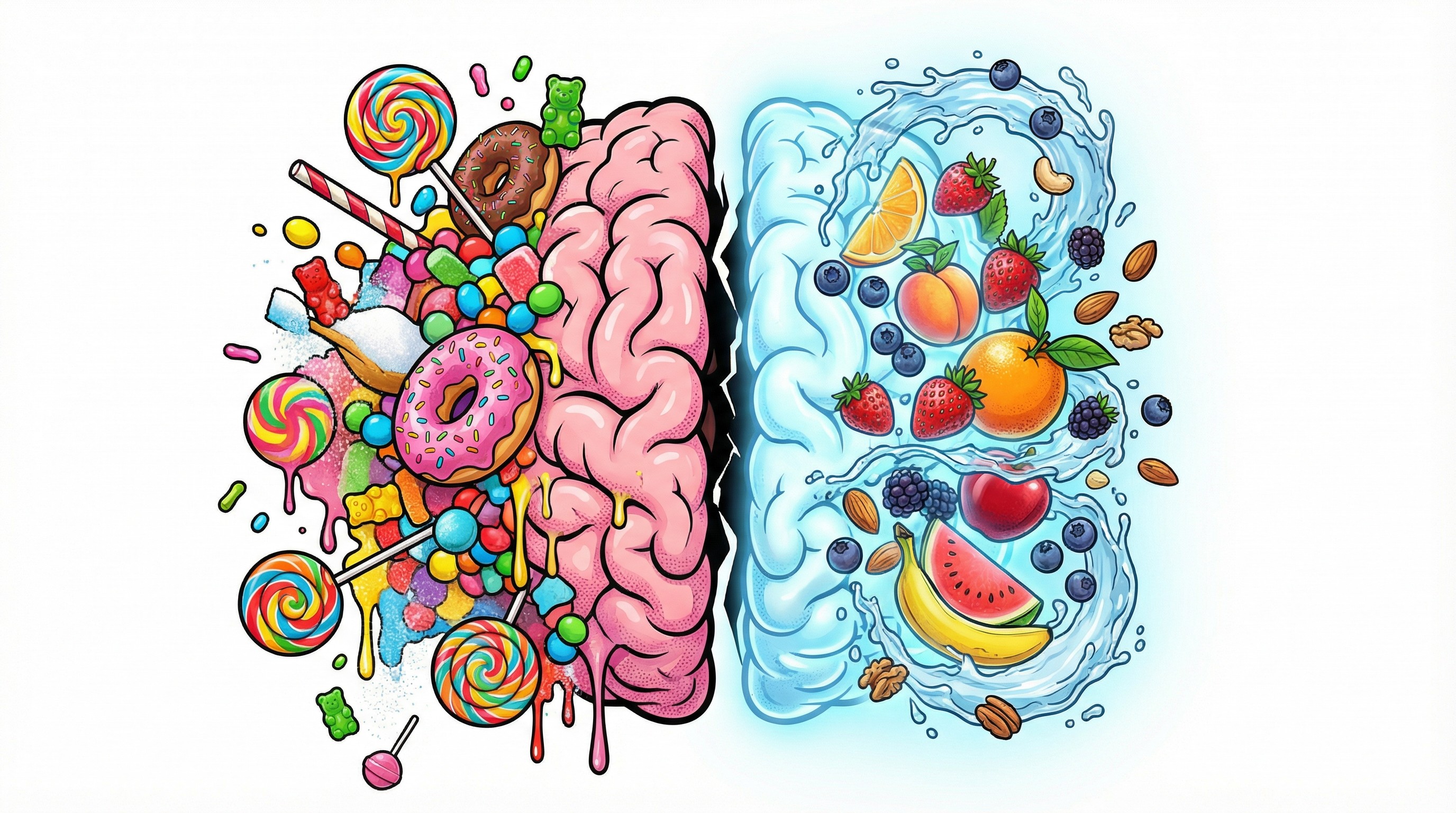
Here is why your brain acts like a toddler in a sweet shop, and how to build a "Dopamine Menu" to hack the craving without the crash.
The Science (Simplified)
Think of dopamine as your brain's battery charge. It fuels motivation, focus, and satisfaction.
Neurotypical brains have a steady trickle of dopamine. ADHD brains (and stressed brains) often have a faulty charger. The battery drains fast. When it hits 10%, your brain hits the panic button. It needs a recharge immediately.
Sugar is "Fast Charging." It hits the bloodstream instantly. It spikes dopamine. You feel better for 20 minutes.
The Crash. Because it was a "fast charge," it drains just as quickly. Your blood sugar plummets, your focus dies, and you are left hunting for more sugar.
You don't need to stop seeking dopamine. You just need to change the source.
The Solution: Build Your "Dopamine Menu"
Instead of defaulting to sugar, you need to give your brain stimulation through other senses. We call this a Dopamine Menu—a list of go-to snacks and actions that wake your brain up without the calorie bomb.
Here are 3 ways to hack the system:
1. The Texture Hack (Crunch > Taste)
Often, your brain doesn't want sweet; it wants stimulation. Soft food is boring. Crunchy food is stimulating. It creates noise and vibration in your skull, which wakes up the brain.
The Swap: Instead of chocolate (soft/melting), go for Popcorn, Carrot Sticks with Hummus, or Rice Cakes.
Why it works: The mechanical act of crunching provides the sensory input your brain is screaming for, often satisfying the urge even if the food isn't sugary.
2. The Temperature Hack (Shock the System)
If you are feeling sluggish, warm or room-temperature food won't help. You need a shock.
The Swap: Frozen Grapes or Ice Cold Water with Lemon.
Why it works: The intense cold provides a sensory "jolt" that alerts the nervous system. Frozen grapes specifically have a sorbet-like texture that mimics a sweet treat but takes much longer to eat.
3. The "Protein Bridge"
Sometimes, you just really need the chocolate. That is fine. But never eat "naked carbs" (sugar on its own).
The Swap: Don't eat the chocolate bar alone. Eat it with a high-protein yogurt or a handful of nuts.
Why it works: Protein and fat slow down the absorption of sugar into the blood. You get the taste you wanted, but instead of a vertical spike and crash, you get a gentle curve. You stay fuller, and the dopamine hit lasts longer.
Your New 3 PM Menu
Next time the brain fog hits, don't walk blindly to the vending machine. Pick an item from your new Dopamine Menu:
Stimulation: Salt and Vinegar Rice Cakes (The sharp taste + crunch).
Sweet Hit: A protein bar (Sweet taste + protein to slow digestion).
The Reset: A pint of ice-cold water and a 5-minute walk (Movement releases dopamine too).
Stop Fighting Your Biology
You aren't "bad" for craving sugar. Your brain is just trying to help you focus. The trick isn't to starve it; it's to give it better fuel.
Want to see if that "healthy" snack is actually a sugar bomb? Check the macro split before you buy.
Download MyMacroGo. Scan the barcode and see the sugar vs. protein breakdown instantly.
Read Time: 4 Mins
It’s 3:00 PM. You have been staring at a spreadsheet for four hours. Suddenly, your brain starts screaming one word at you:
"Sugar".
You don't want an apple. You don't want a handful of almonds. You want a chocolate bar, a fizzy drink, or a biscuit. And you want it now.
If you have ADHD (or just a tired, overworked brain), this isn't a failure of willpower. It is a biological emergency. Your brain is running low on fuel, and it is hunting for the fastest, easiest source of stimulation it can find.
In the neurodivergent world, we call this "Dopamine Seeking."
Here is why your brain acts like a toddler in a sweet shop, and how to build a "Dopamine Menu" to hack the craving without the crash.
The Science (Simplified)
Think of dopamine as your brain's battery charge. It fuels motivation, focus, and satisfaction.
Neurotypical brains have a steady trickle of dopamine. ADHD brains (and stressed brains) often have a faulty charger. The battery drains fast. When it hits 10%, your brain hits the panic button. It needs a recharge immediately.
Sugar is "Fast Charging." It hits the bloodstream instantly. It spikes dopamine. You feel better for 20 minutes.
The Crash. Because it was a "fast charge," it drains just as quickly. Your blood sugar plummets, your focus dies, and you are left hunting for more sugar.
You don't need to stop seeking dopamine. You just need to change the source.
The Solution: Build Your "Dopamine Menu"
Instead of defaulting to sugar, you need to give your brain stimulation through other senses. We call this a Dopamine Menu—a list of go-to snacks and actions that wake your brain up without the calorie bomb.
Here are 3 ways to hack the system:
1. The Texture Hack (Crunch > Taste)
Often, your brain doesn't want sweet; it wants stimulation. Soft food is boring. Crunchy food is stimulating. It creates noise and vibration in your skull, which wakes up the brain.
The Swap: Instead of chocolate (soft/melting), go for Popcorn, Carrot Sticks with Hummus, or Rice Cakes.
Why it works: The mechanical act of crunching provides the sensory input your brain is screaming for, often satisfying the urge even if the food isn't sugary.
2. The Temperature Hack (Shock the System)
If you are feeling sluggish, warm or room-temperature food won't help. You need a shock.
The Swap: Frozen Grapes or Ice Cold Water with Lemon.
Why it works: The intense cold provides a sensory "jolt" that alerts the nervous system. Frozen grapes specifically have a sorbet-like texture that mimics a sweet treat but takes much longer to eat.
3. The "Protein Bridge"
Sometimes, you just really need the chocolate. That is fine. But never eat "naked carbs" (sugar on its own).
The Swap: Don't eat the chocolate bar alone. Eat it with a high-protein yogurt or a handful of nuts.
Why it works: Protein and fat slow down the absorption of sugar into the blood. You get the taste you wanted, but instead of a vertical spike and crash, you get a gentle curve. You stay fuller, and the dopamine hit lasts longer.
Your New 3 PM Menu
Next time the brain fog hits, don't walk blindly to the vending machine. Pick an item from your new Dopamine Menu:
Stimulation: Salt and Vinegar Rice Cakes (The sharp taste + crunch).
Sweet Hit: A protein bar (Sweet taste + protein to slow digestion).
The Reset: A pint of ice-cold water and a 5-minute walk (Movement releases dopamine too).
Stop Fighting Your Biology
You aren't "bad" for craving sugar. Your brain is just trying to help you focus. The trick isn't to starve it; it's to give it better fuel.
Want to see if that "healthy" snack is actually a sugar bomb? Check the macro split before you buy.
Download MyMacroGo. Scan the barcode and see the sugar vs. protein breakdown instantly.